Trial & conversion optimisation
How I identified and unlocked two behavioural growth levers within Trint’s trial journey

Initiative 1 - Turning sharing into a growth loop
As part of a product-led growth initiative, we needed to increase trial acquisition and subscription without relying on additional marketing spend.
We focused on identifying growth levers within the existing product experience. Sharing was a natural focus, as it exposed non-Trint users to the product without additional marketing spend.
Trint users could:
Share transcripts with existing account holders (full collaboration)
Share with non-account holders, who could access the transcript via a guest account with limited collaborative functionality
Guest accounts were automatically created when:
A trial expired without subscription, or
A non-user received a collaborative share link
However, most sharing was happening via public, read-only links.
This meant recipients were exposed to content, but not to Trint’s collaborative value.
Behavioural data & research
What we observed
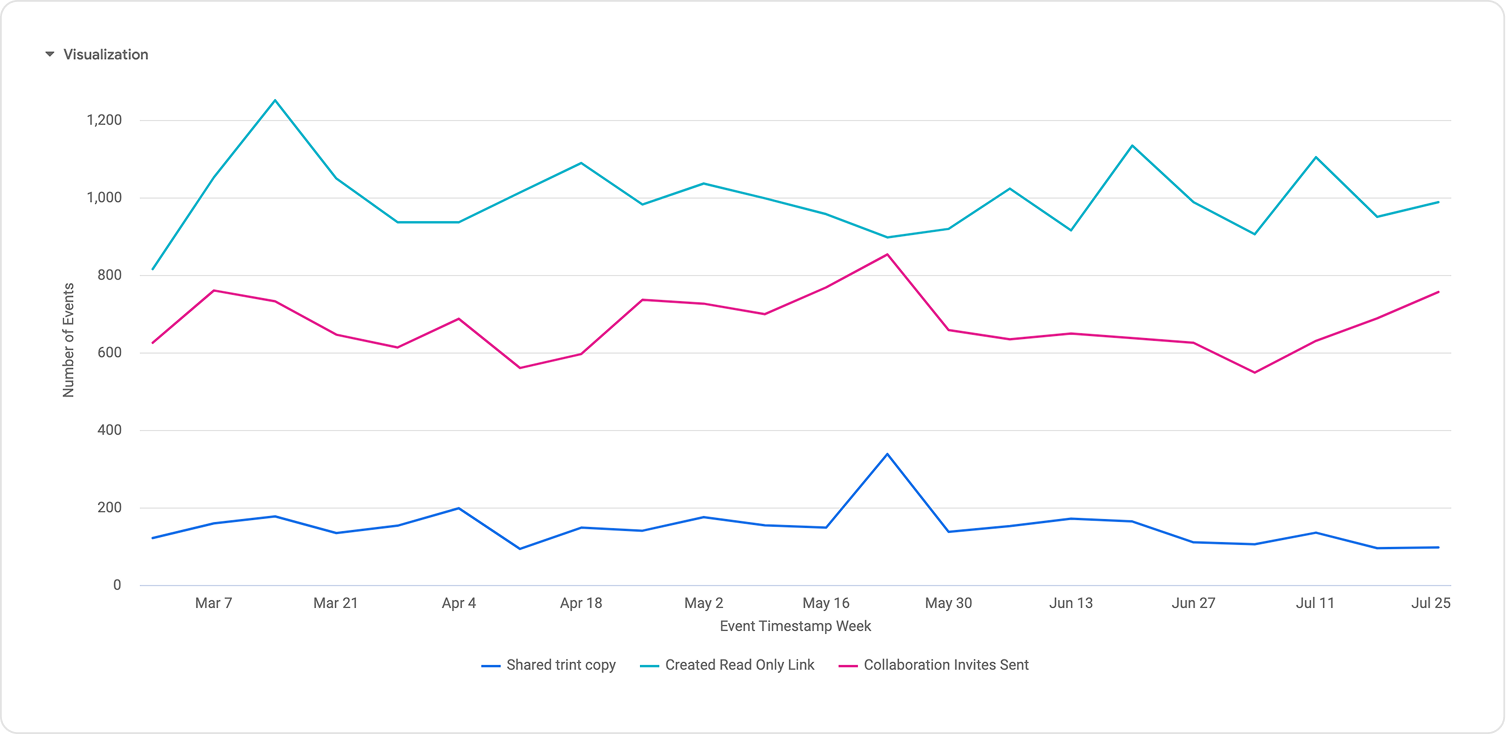
Behavioural data showed the majority of shares were read-only public links.
What we learned through research
👀 Default bias towards sharing public links
Users assumed public link was the only option for sharing with non-account holders.
🫥 Invisible guest collaboration model
Many were unaware that collaborative invites could onboard recipients into a guest account, enabling read and comment access, with the option to start a full trial for editing.
UX insight
🛑 Misleading primary action
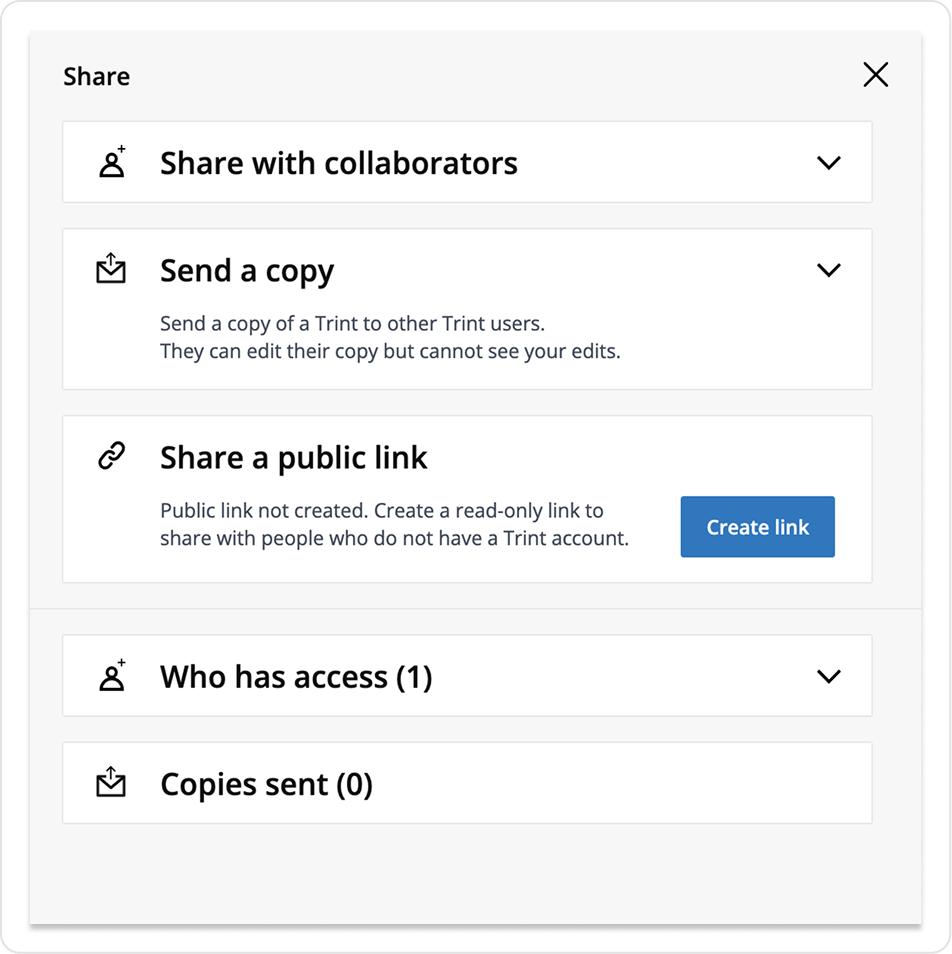
The share modal primary action was misleading. Public link was visually prominent and explicitly positioned for non-account holders, reinforcing the wrong default behaviour.
The problem
Users default to sharing transcripts via read-only public links. Many are unaware that recipients can collaborate without needing a paid Trint account.

Behavioural impact
🤝 Collaboration correlates with conversion
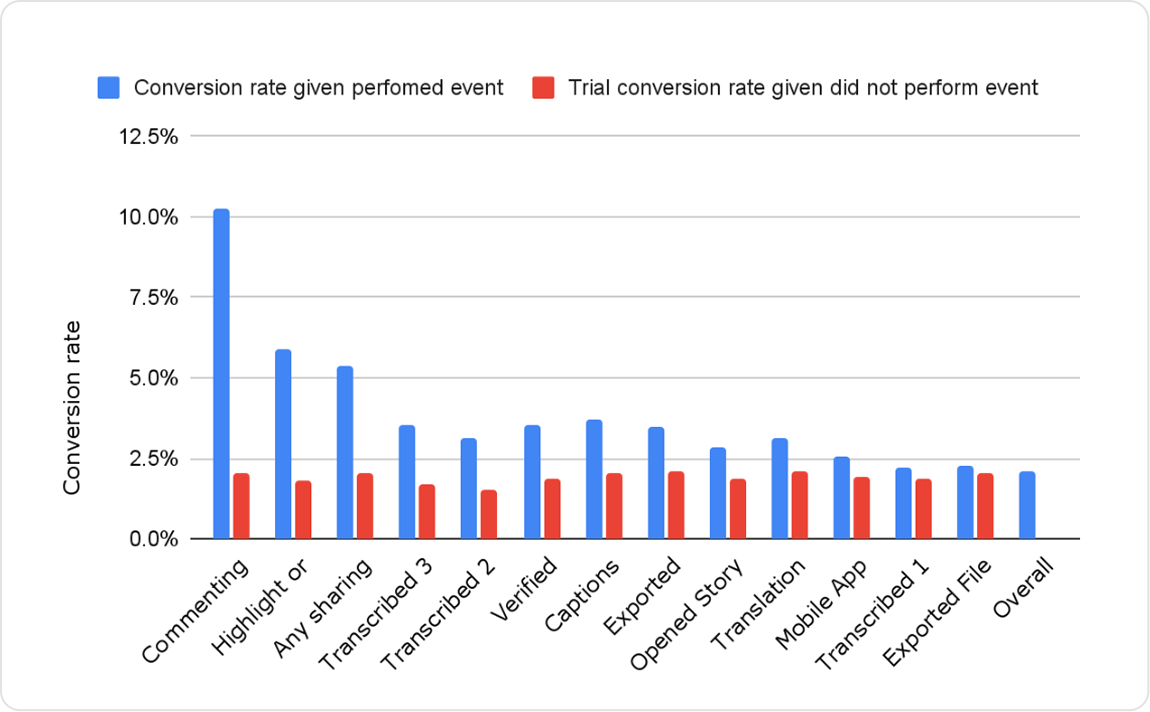
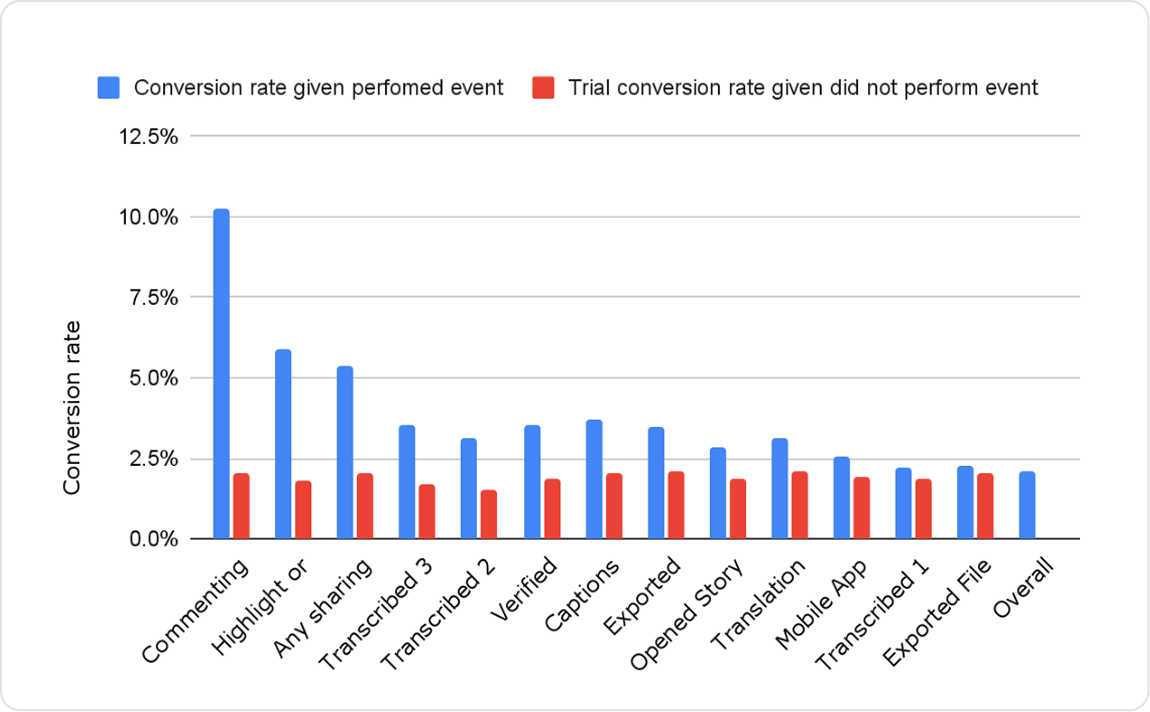
Users who engaged in collaborative behaviours (e.g. commenting) were significantly more likely to subscribe.
Hypothesis
If we reposition collaborative sharing as the primary action, onboarding non-account holders into a guest account where they can actively comment, more recipients will experience product value and subsequently opt into trial and subscribe.

Accelerating value in the sharing flow
Enabling recipients to actively collaborate on shared transcripts earlier in the flow increased the likelihood of trial entry and downstream subscription.

Focus: Shift value realisation earlier in the flow
Pattern validation
We explored two structural approaches to reduce cognitive load and clarify the primary action.
We tested two structural approaches to the share modal to reduce cognitive load and clarify collaboration with non-account holders.
Pattern testing findings
✅ Familiar collaboration patterns
Participants consistently preferred the tabbed layout (Prototype B), which aligned more closely with collaboration patterns they were familiar with (e.g. Google Docs-style sharing).
✅ Clarity builds confidence
Users also preferred the more explicit copy explaining guest permissions. Clear articulation that non-Trint recipients would be able to read and comment, which reduced uncertainty and increased confidence in sending collaborative invites.
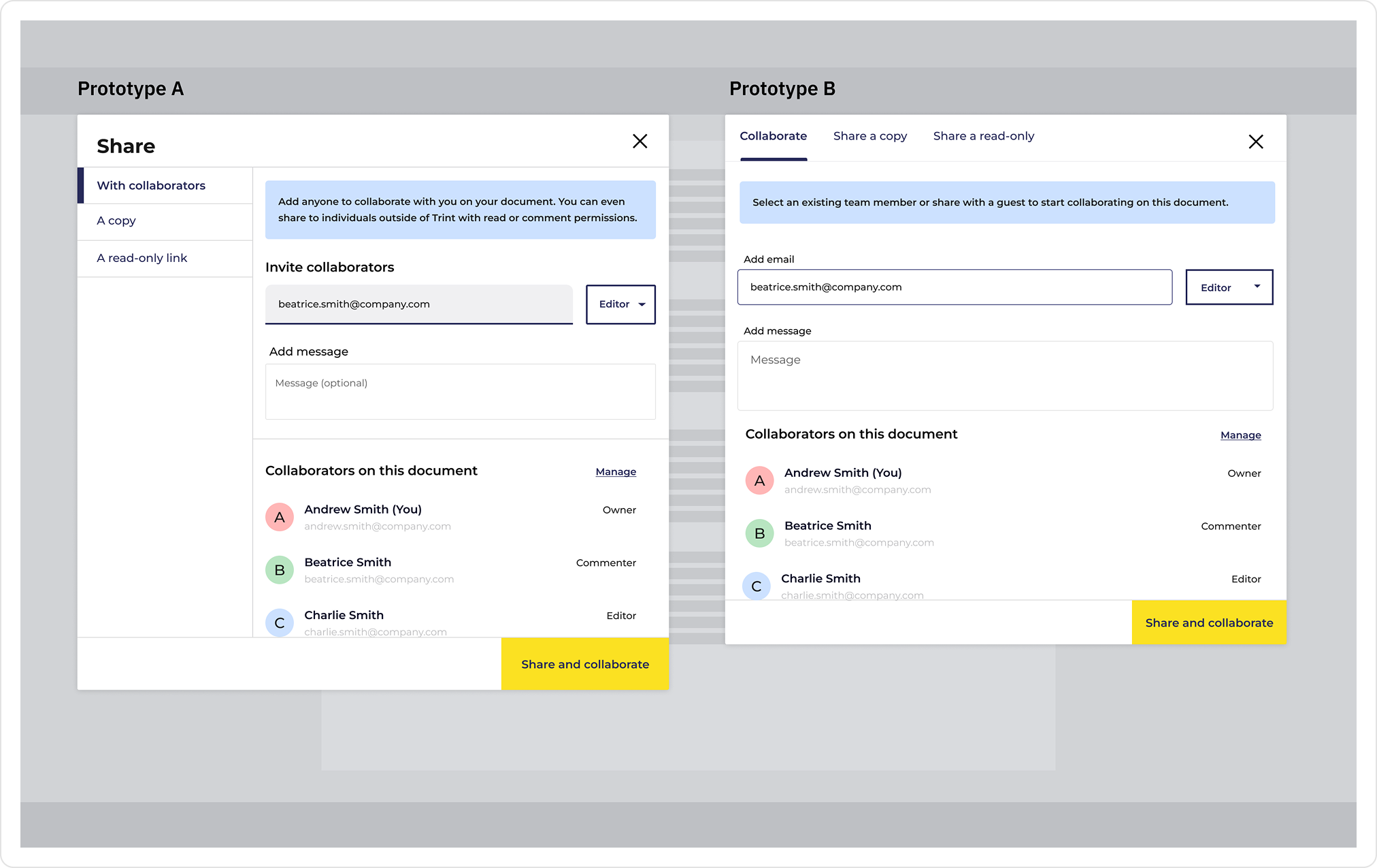
Following user testing, we moved forward with the structural pattern from Prototype B, combining it with the clearer, more explicit guest-permission messaging from Prototype A.
Impact
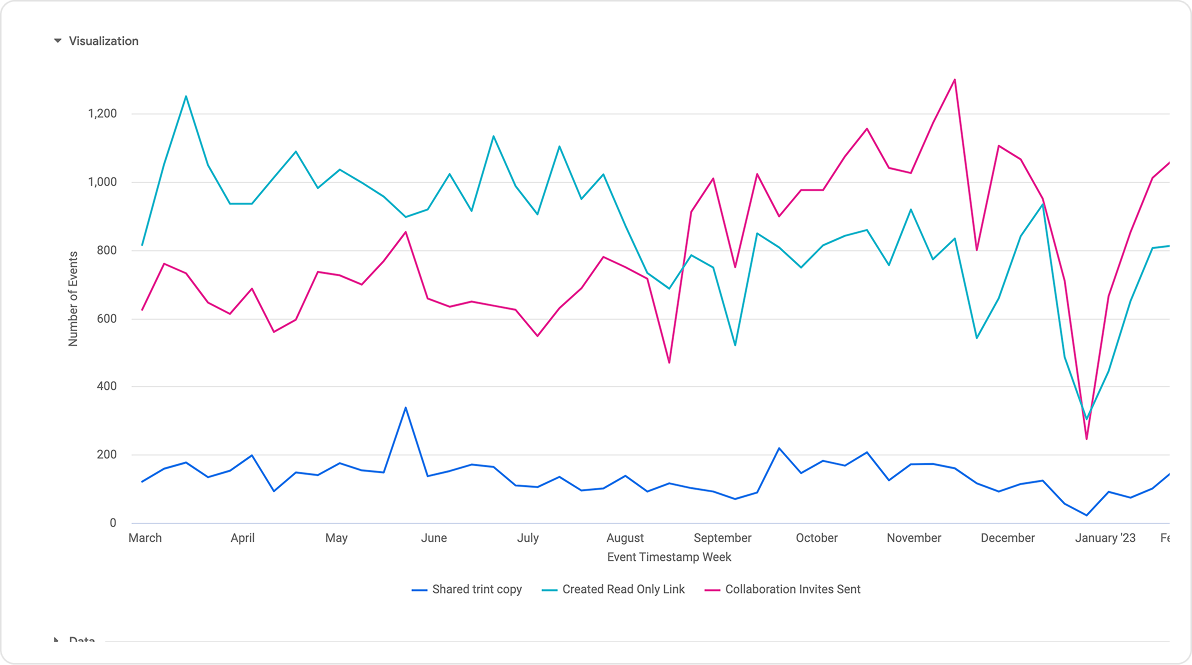
Following the release of the redesigned share modal, collaborative invites began to exceed read-only public link usage, reversing the previous default behaviour.
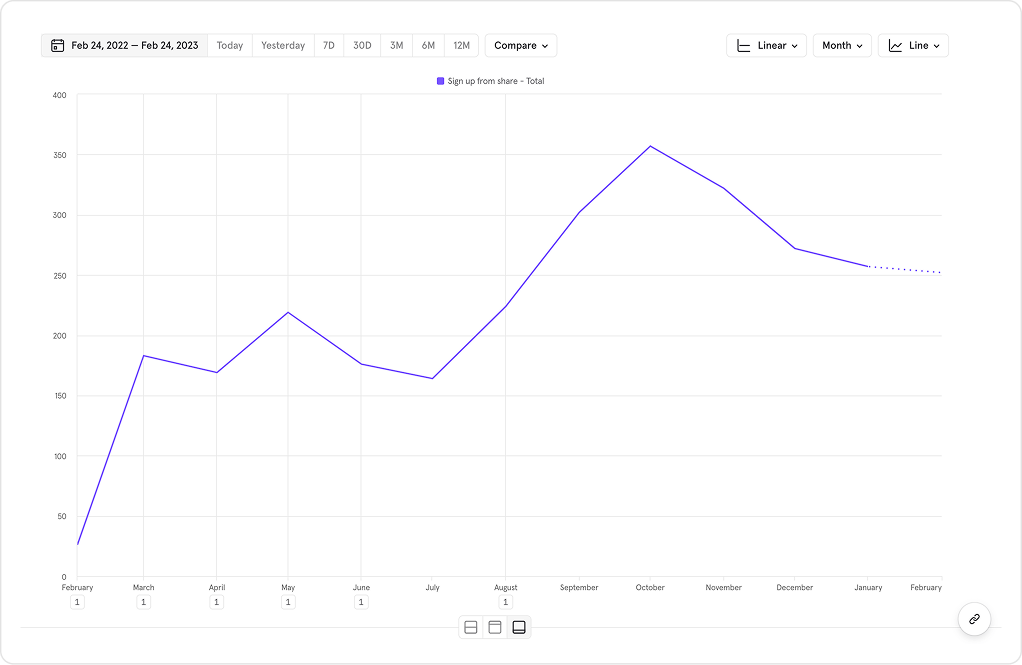
By repositioning collaborative sharing and clarifying guest permissions, we successfully shifted how users shared transcripts increasing exposure to Trint’s core collaborative value. We also observed a measurable uplift in downstream conversion.
Growth impact
At peak +62%
Increase in share driven sign ups following release.
17.2%
Of users signing up via a share invite went on to start a free trial (vs. 7.13% prior to the redesign).
6%
Of those trial users converted to paid subscribers
(vs. 1.64% previously).
Initiative 2 - Driving core workflow adoption
Building on earlier behavioural insights, we examined how deeply trial users were engaging with core editing actions.
Given their strong association with conversion, we focused specifically on increasing adoption of commenting and highlighting during the trial experience.
The behavioural gap
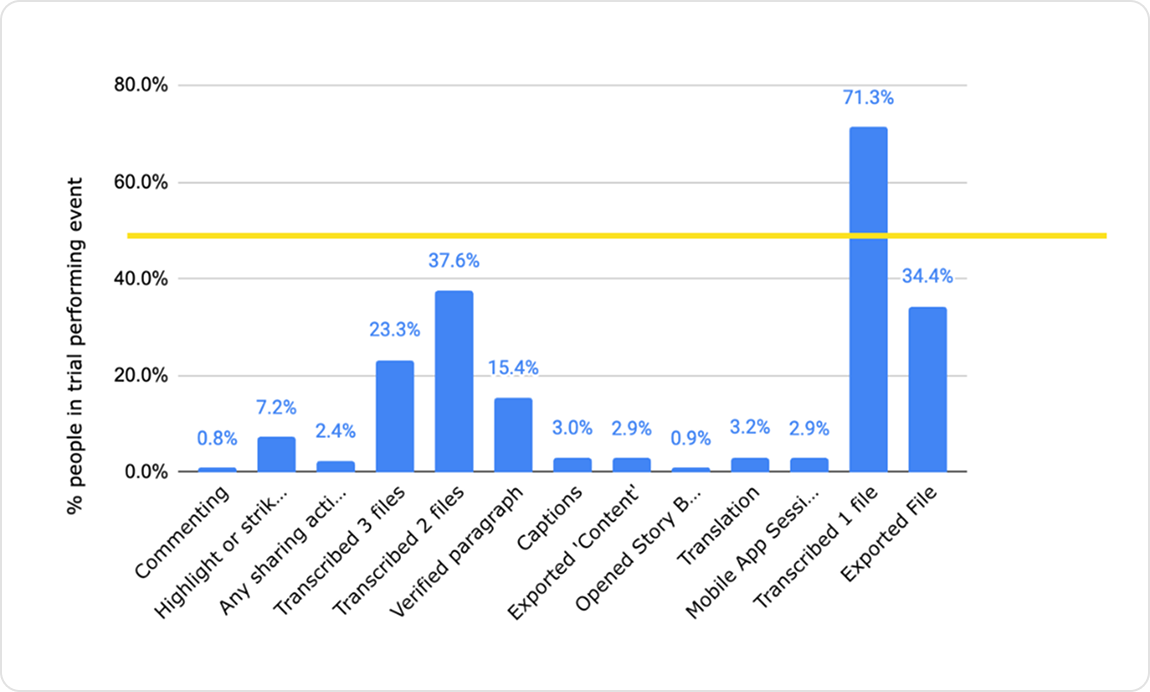
🫣 One-and-done usage
~70% of trialists aren’t doing anything beyond transcribing one file.
Hypothesis
If we make commenting and highlighting more visible and easier to use within the editor, trial users will engage more deeply with the workflow, increasing their exposure to Trint’s core value and converting them to subscribers.

Idea generation
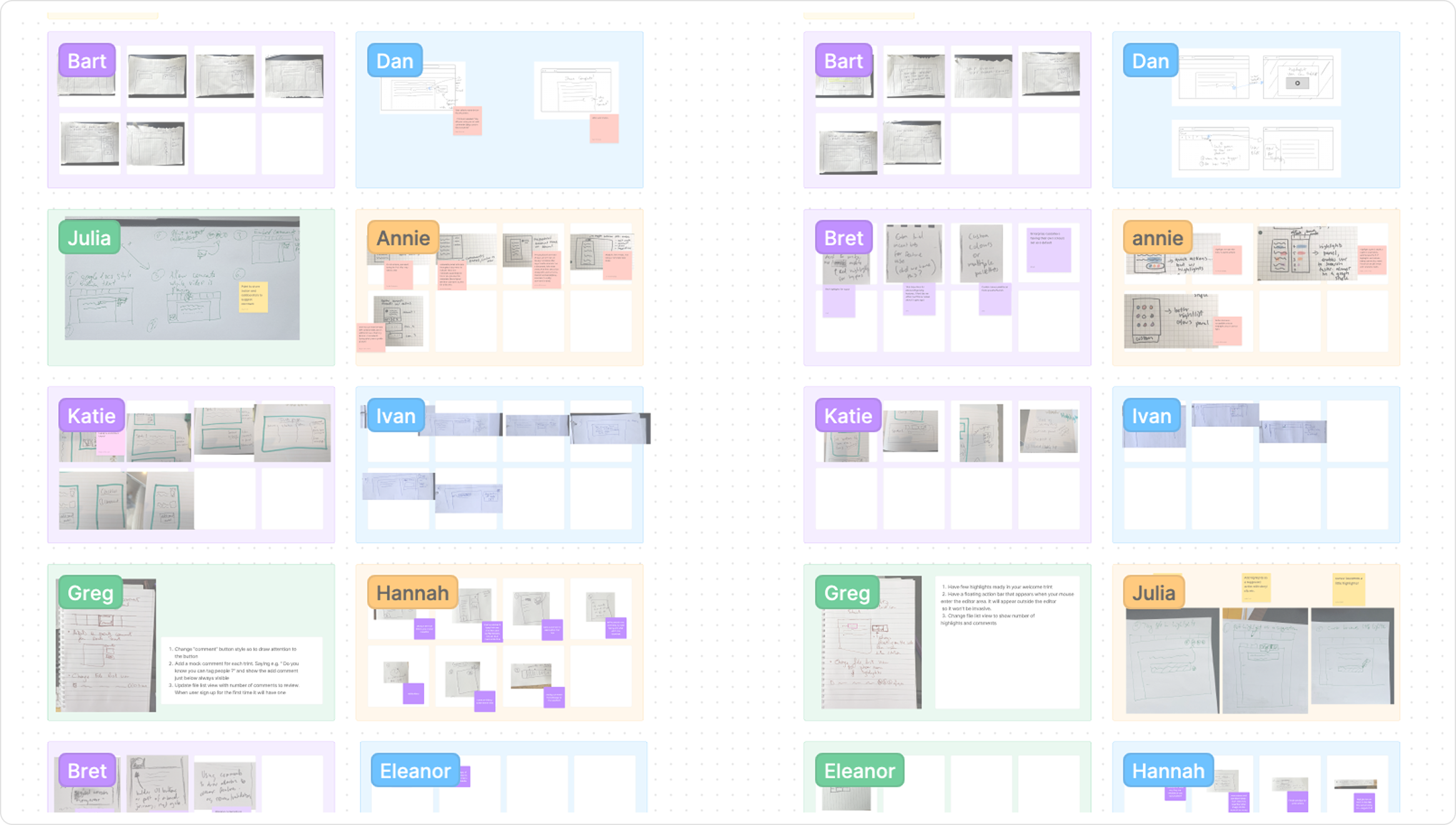
I ran a focused cross-functional ideation workshop to generate ideas that could increase adoption of commenting and highlighting. Ideas were prioritised using an impact/effort matrix before moving onto a designing solution and A/B testing.
Inline actions, lower cognitive load
Hypothesis
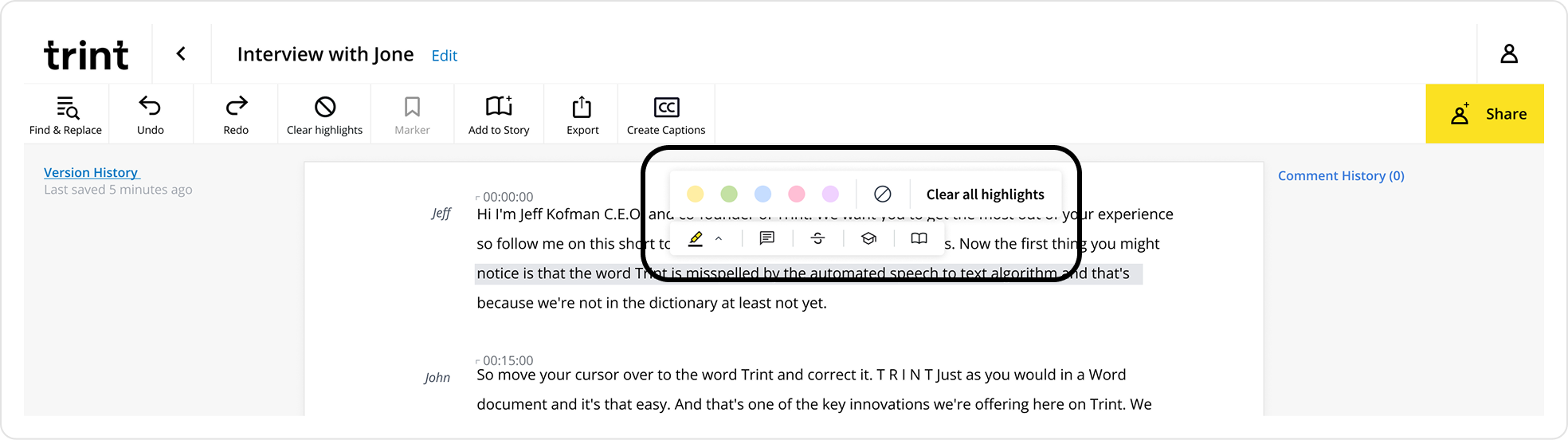
If highlighting actions are available directly next to selected text, more trial users will discover and use highlighting.
What changed?
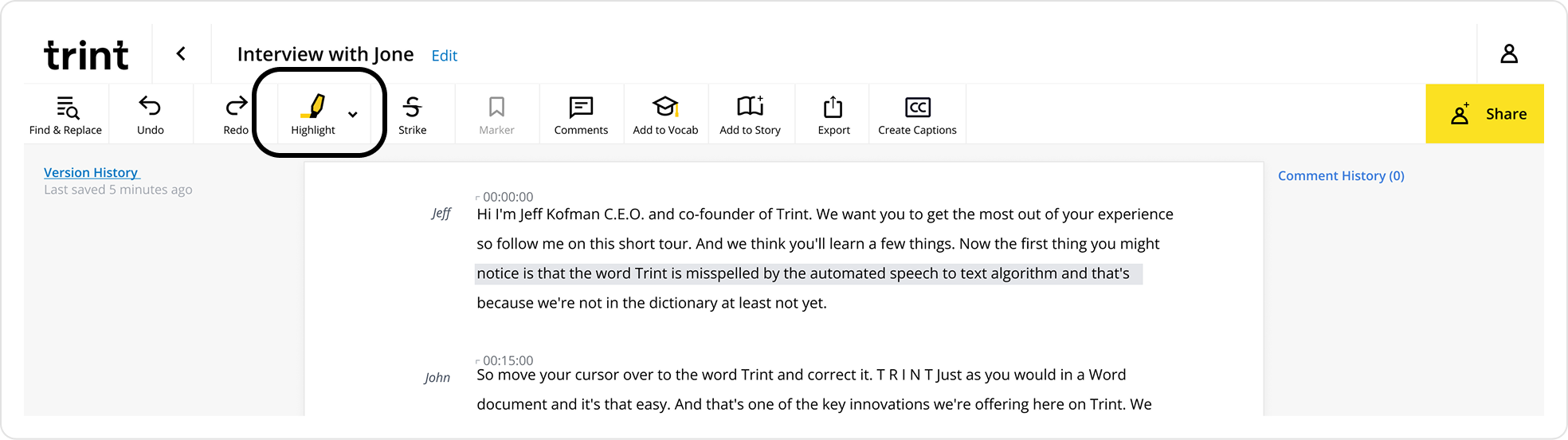
We introduced a floating inline toolbar and tested the variant against the control (keep actions in the main toolbar vs consolidate actions into the inline toolbar).
Control
Variant
Results
The variant where features were in proximity of the action showed stronger signal with a 8% relative lift.
Contextual prompt for comments
Hypothesis
If we surface a contextual example comment in a user’s first transcript, more trial users will recognise that commenting is available and be more likely to use it.
What changed?
We ran a multi-variant test on two comment messages on the placement of a dummy comment.
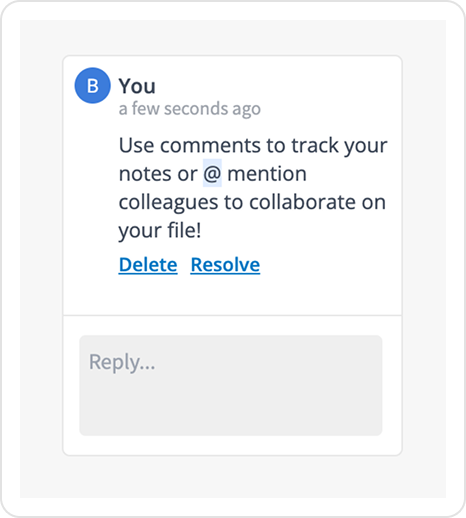
Variant 1 - "Use comments to track your notes or @ mention colleagues to collaborate on your file!"
Variant 2 - "Highlight a selection of text and click to ‘add comment’ to track notes or @ mention your colleagues to invite them in your file!”
Results
The experiment did not achieve statistical significance. However, we saw a small directional uplift in comment activation. While the quantitative signal was limited, user testing showed that the dummy comment clarified that commenting was possible, improving feature discoverability for trial users.
Post launch impact
Following rollout, we saw sustained increases in core workflow engagement during trial.
28.4%
Of users engaged with highlighting in trial
(vs. 19.8% prior to the rollout)
5.8%
of users engaged with commenting
(vs. 3.75%% prior to the rollout)
Shortly after rollout, pricing changes were introduced by the commercial team which impacted conversion behaviour. As a result, it was difficult to isolate the direct impact of these engagement improvements on subscription rates.