Leading beyond delivery
How I embedded design thinking, accessibility, and quality standards across product teams.
Snapshot overview
For much of my time at Trint, the design function operated without a dedicated Design Lead or Head of Design. As a result, design quality varied across teams, and processes were inconsistent or missing altogether. Accessibility was not considered and product work focused on meeting functional requirements, with clarity, emotion, and overall experience often addressed late or not at all.
As my role became more senior, I took ownership of introducing shared design thinking, accessibility practices and quality guidelines.
Creating a shared Discovery process
Problem solving looked different from team to team, discovery was sometimes limited or skipped entirely. This led teams to move quickly into solutions without a shared understanding of the problem.
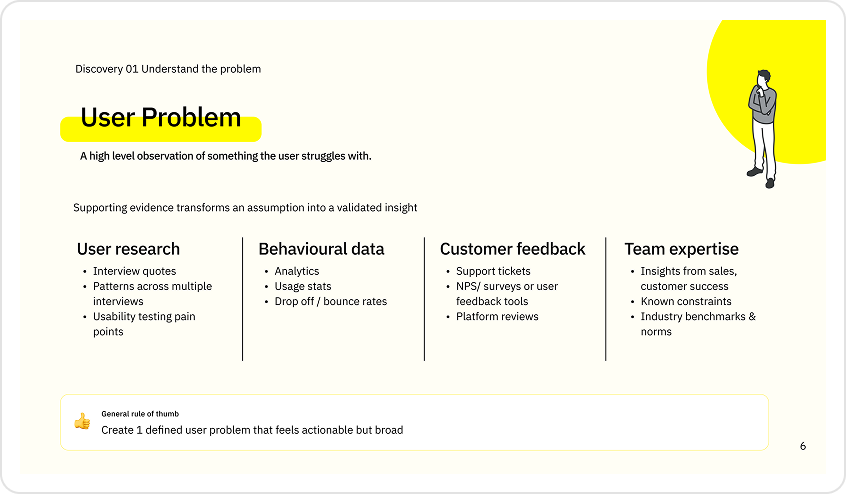
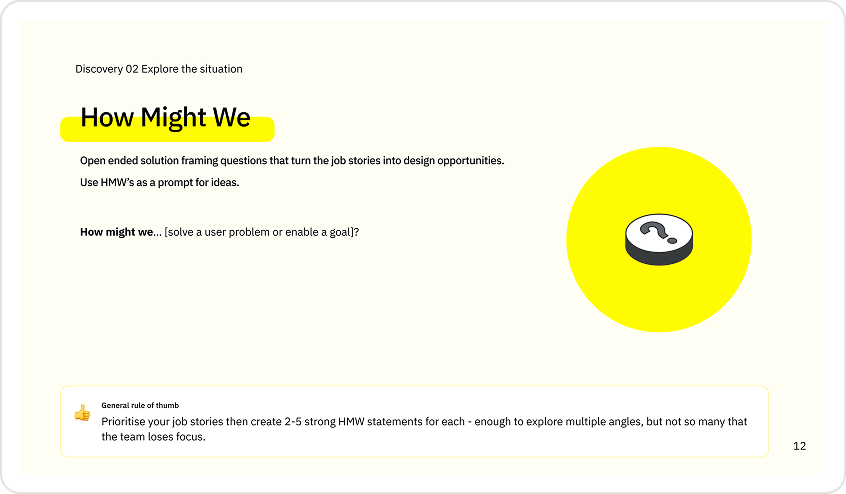
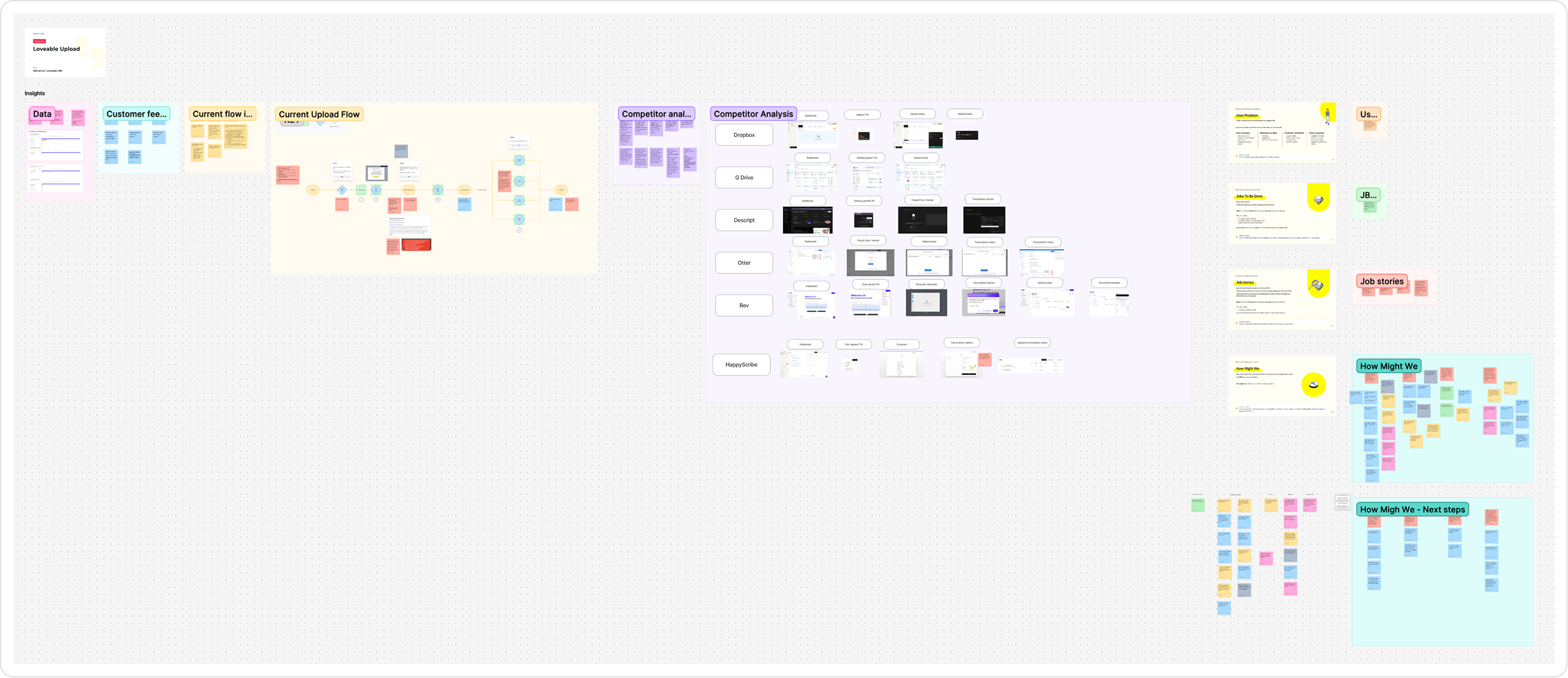
I created a discovery framework deck and introduced it to the Product team, applying the framework across mock scenarios as a team.
The framework focused on three key stages:
Understanding the problem Structured approach to problem framing and Jobs-to-be-done through qualitative and quantitive data
Exploring the situation Competitive analysis, Job Stories and How Might We statements
Defining success Acceptance criteria and metrics
The deck became a shared artefact that Product team members continued to reference when running discovery sessions
2. Unlocking new markets through accessibility
From compliance to competitive advantage.
Accessibility had never been considered. With the upcoming European Accessibility Act there was an opportunity to push for its adoption. I put together a business case and presented it to senior leadership, outlining why accessibility mattered beyond compliance.
The core arguments I presented were:
Compliance with European Accessibility Act
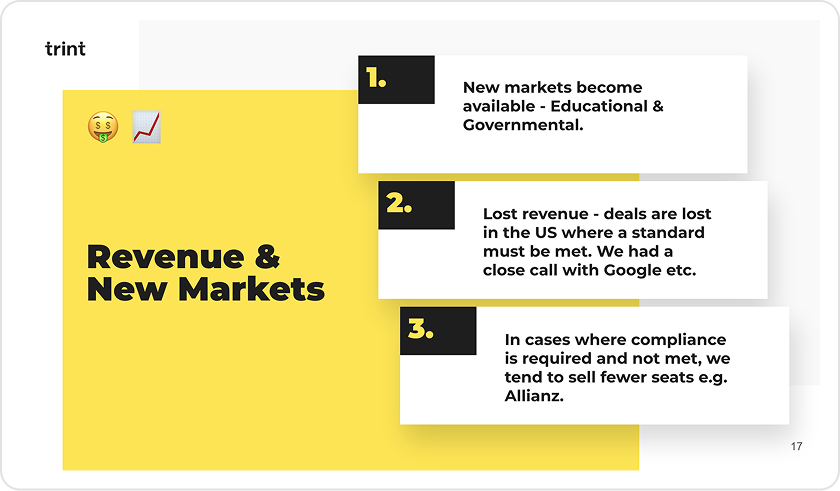
Access to new verticals, including governmental and educational
A competitive advantage over non-compliant products
Clearer, more consistent ways of working for product teams
Less time spent by Sales negotiating accessibility requirements
Once approved, I organised a professional accessibility audit with an external agency to understand the current state of the product.
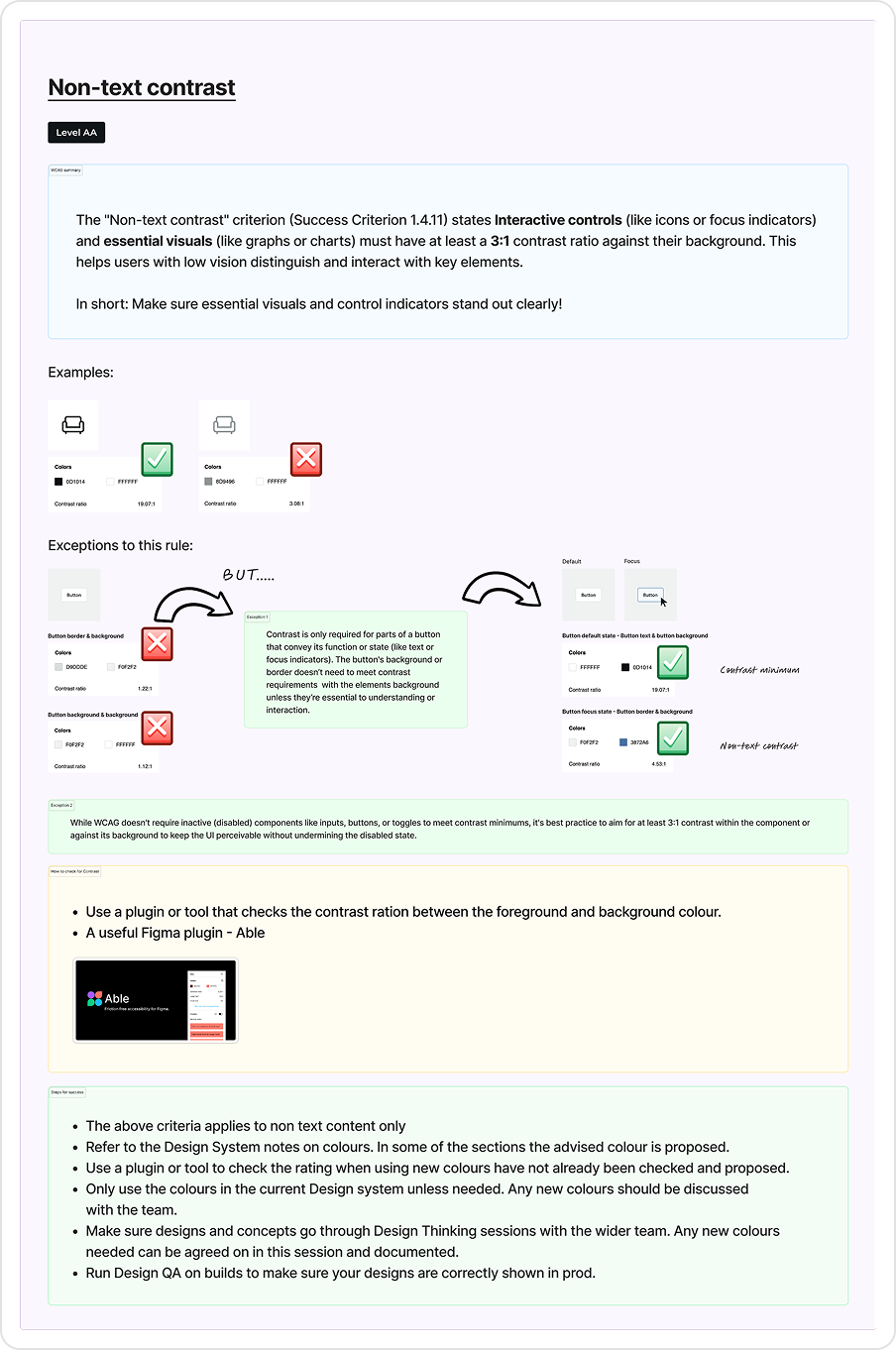
I worked through the issues to create a accessibility manual to make the findings easy to understand and to act on. It documented the issues, why they mattered amd outlines what ‘good’ looked like.
To ensure improvements scaled beyond individual fixes, I updated the design system to address the issue within the design team’s control and created clearer handover guidance to support development.
The design changes I proposed accounted for 25% of the issues raised. I was also asked to join sales calls to provide accessibility updates and walkthrough the Voluntary Product Accessibility Template, helping demonstrate the company’s commitment to accessibility and supporting new customer acquisition.
3. Replacing MVP thinking with Minimum Loved Product
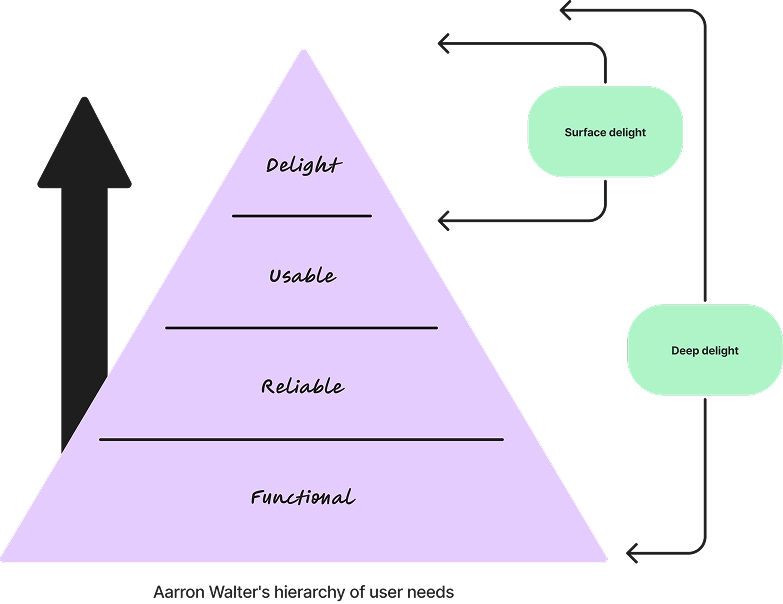
As teams became more aligned on what to build, another gap became clear. Product work often focused on functionality and reliability, but less attention was paid to how the experience felt to users as they moved through it.
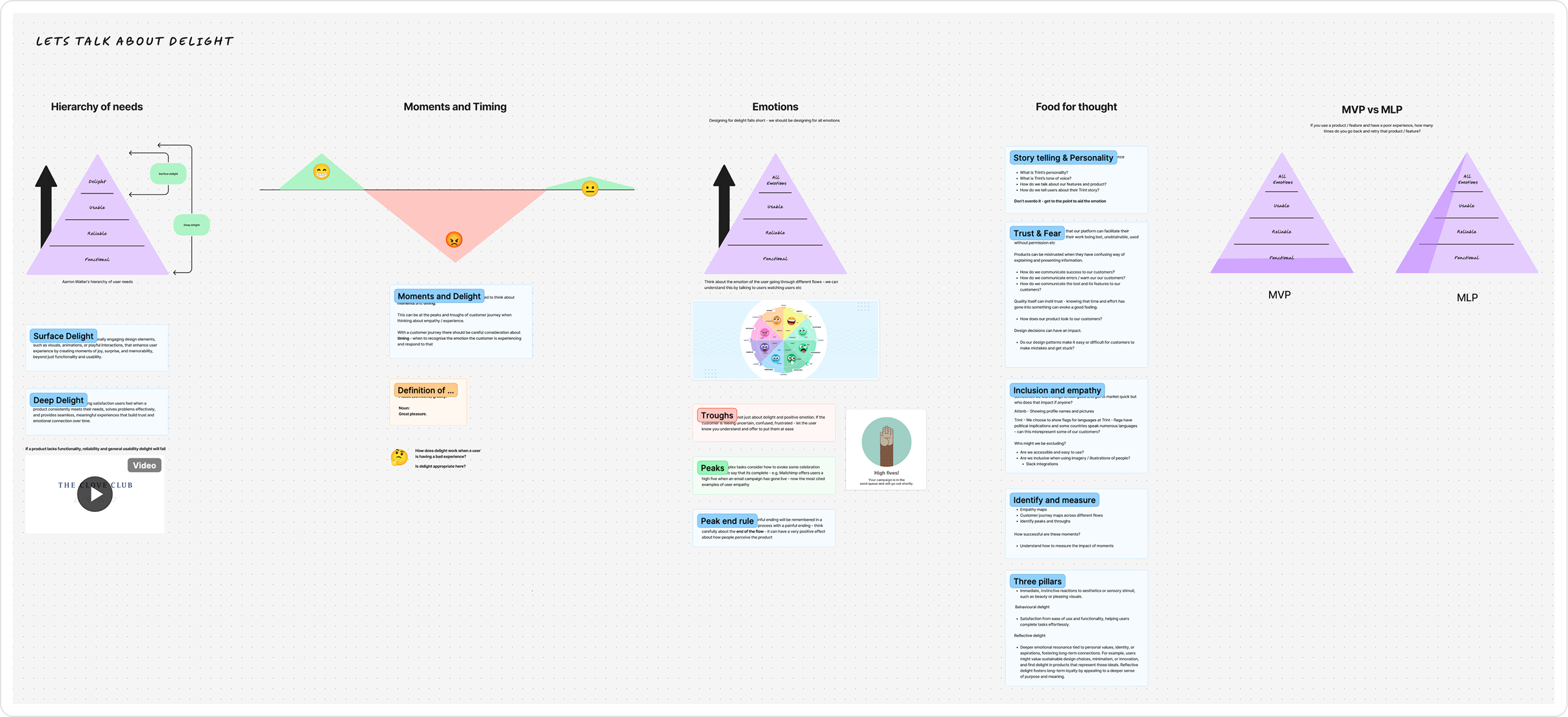
I introduced an Minimum Loveable Product-focused workshop to the Product team to get teams thinking beyond “does this work?” and start asking whether it was clear, usable, and appropriate for the moment the user was in.
We explored how timing, language, and feedback can shape a user’s experience, particularly in moments of uncertainty, waiting, or error, and how small details like copy or animation can either reduce friction or add it.
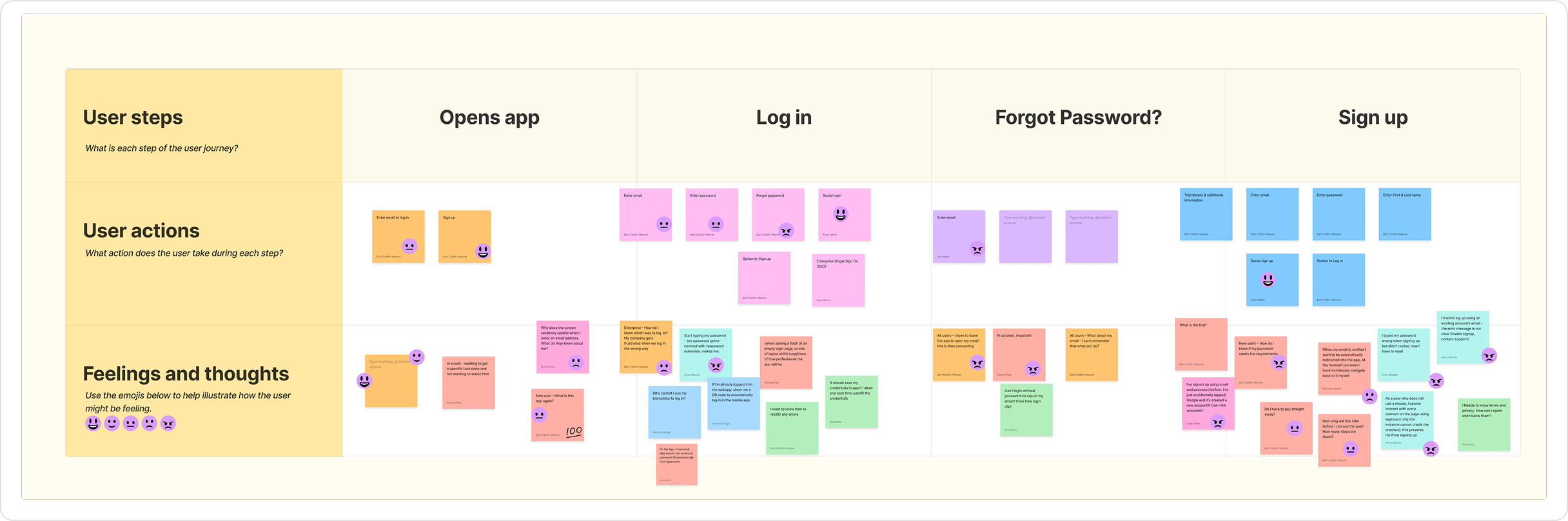
This work encouraged teams to use journey mapping to consider users’ thoughts and feelings throughout a flow, creating experiences that felt intentional, reassuring, and human.
Evidence of impact
Product teams continued applying the approaches independently. Product Managers championed the approaches within their teams and applied them in day-to-day work, helping create more consistent ways of thinking across Product, Design, and Engineering.
To ensure these changes were repeatable, I created a set of shared design artefacts:
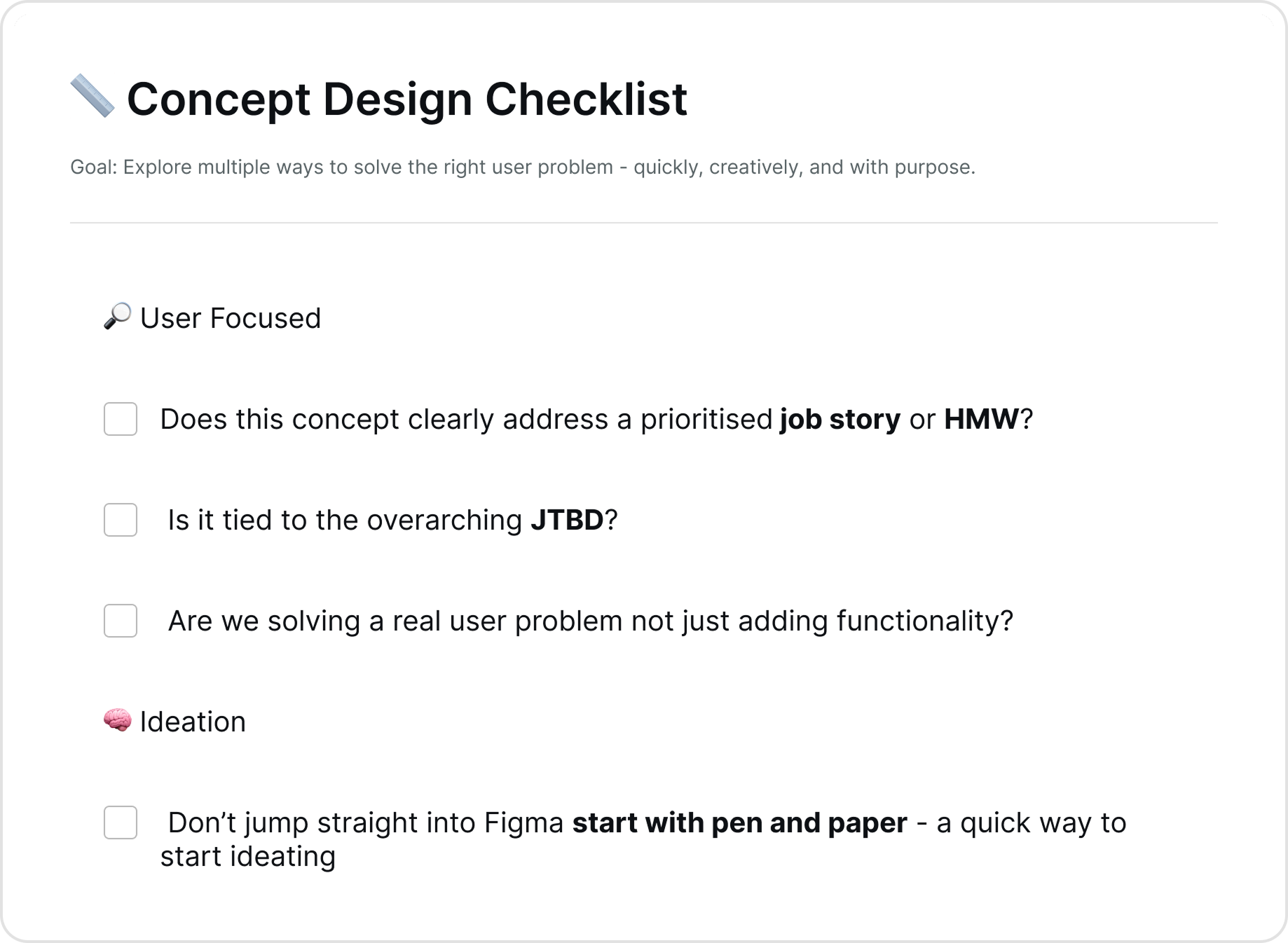
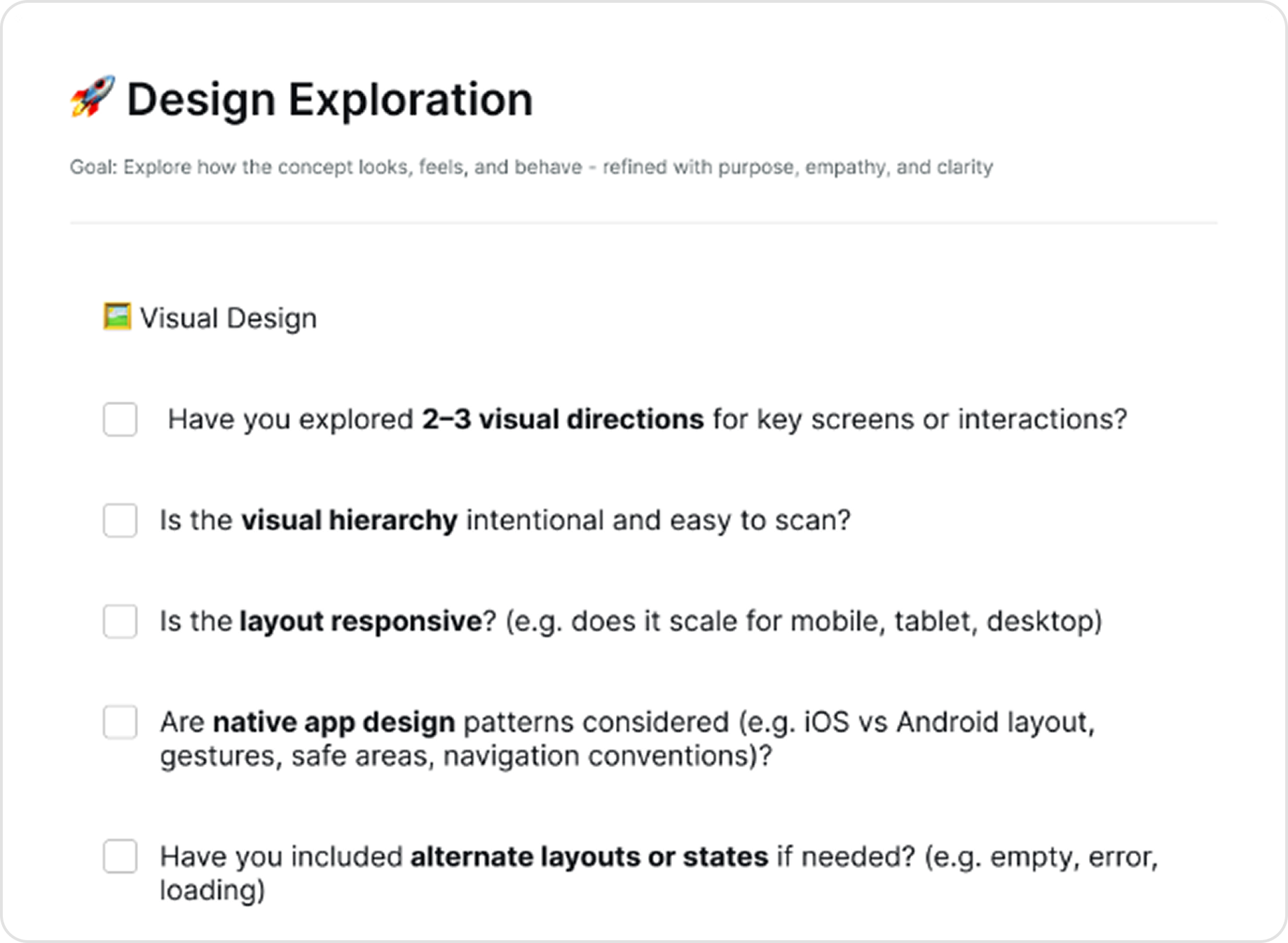
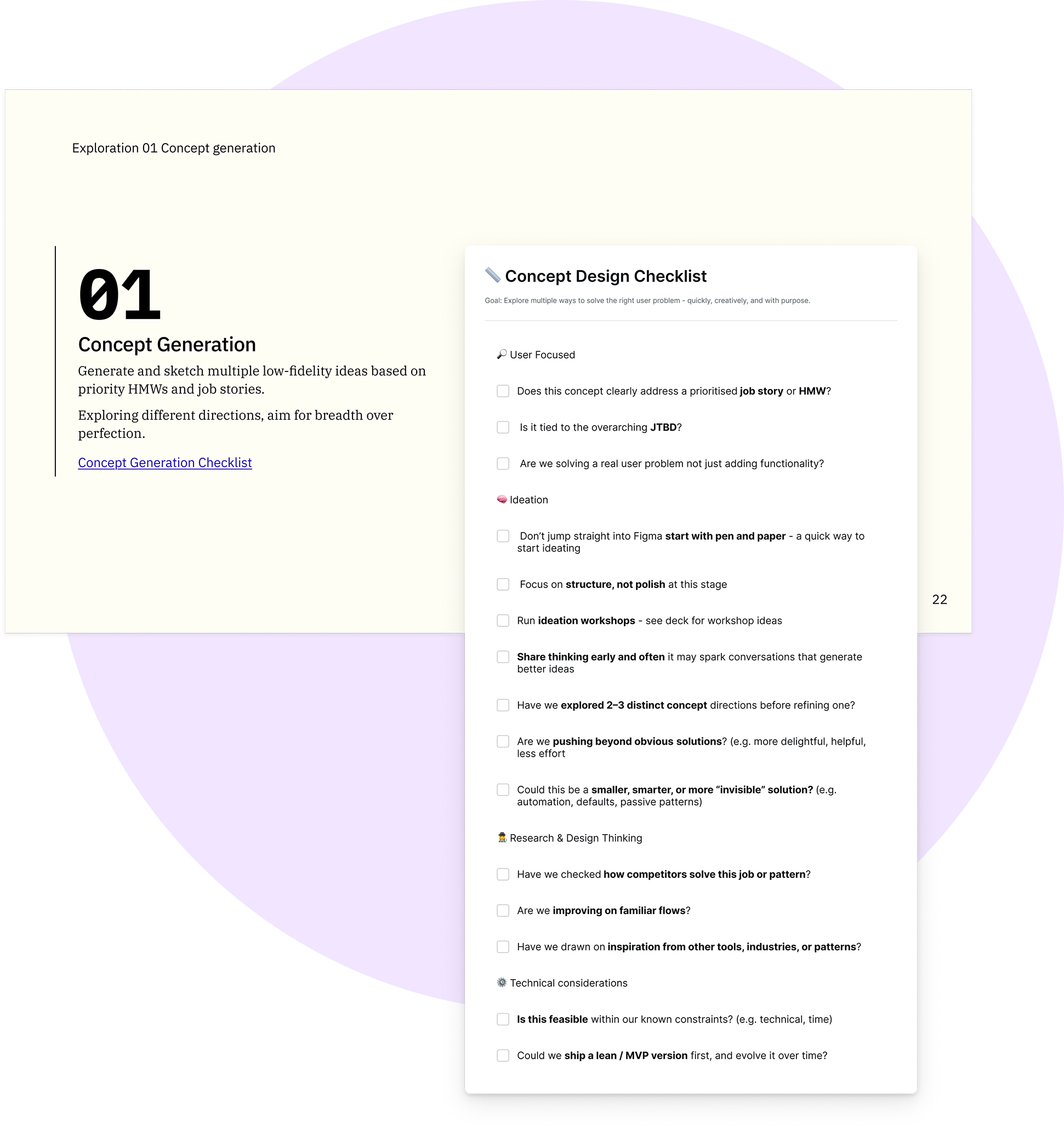
Created design specific checklists covering the full design process, accessibility and MLP thinking
These checklists were positioned across three stages: Concept generation, Design exploration & Feedback and iteration
Used to support consistency across teams and onboard future Designers
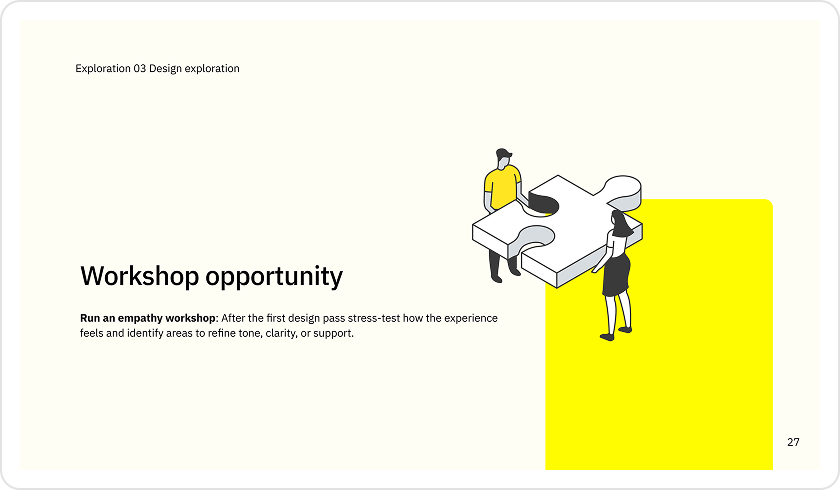
Alongside the checklists, I proposed a set of collaborative workshops Designers could use to involve the wider team at key moments. This shifted design away from working in isolation and encouraged shared ownership of ideas, decisions, and outcomes.
Together, these changes helped unify how teams worked, raised the baseline of design quality, and made thoughtful, inclusive design easier to achieve consistently.