Embedding Trint into enterprise workflows
Reducing duplicated work in complex newsroom systems by embedding Trint directly into editorial pipelines, generating £750k+ in enterprise pipeline.
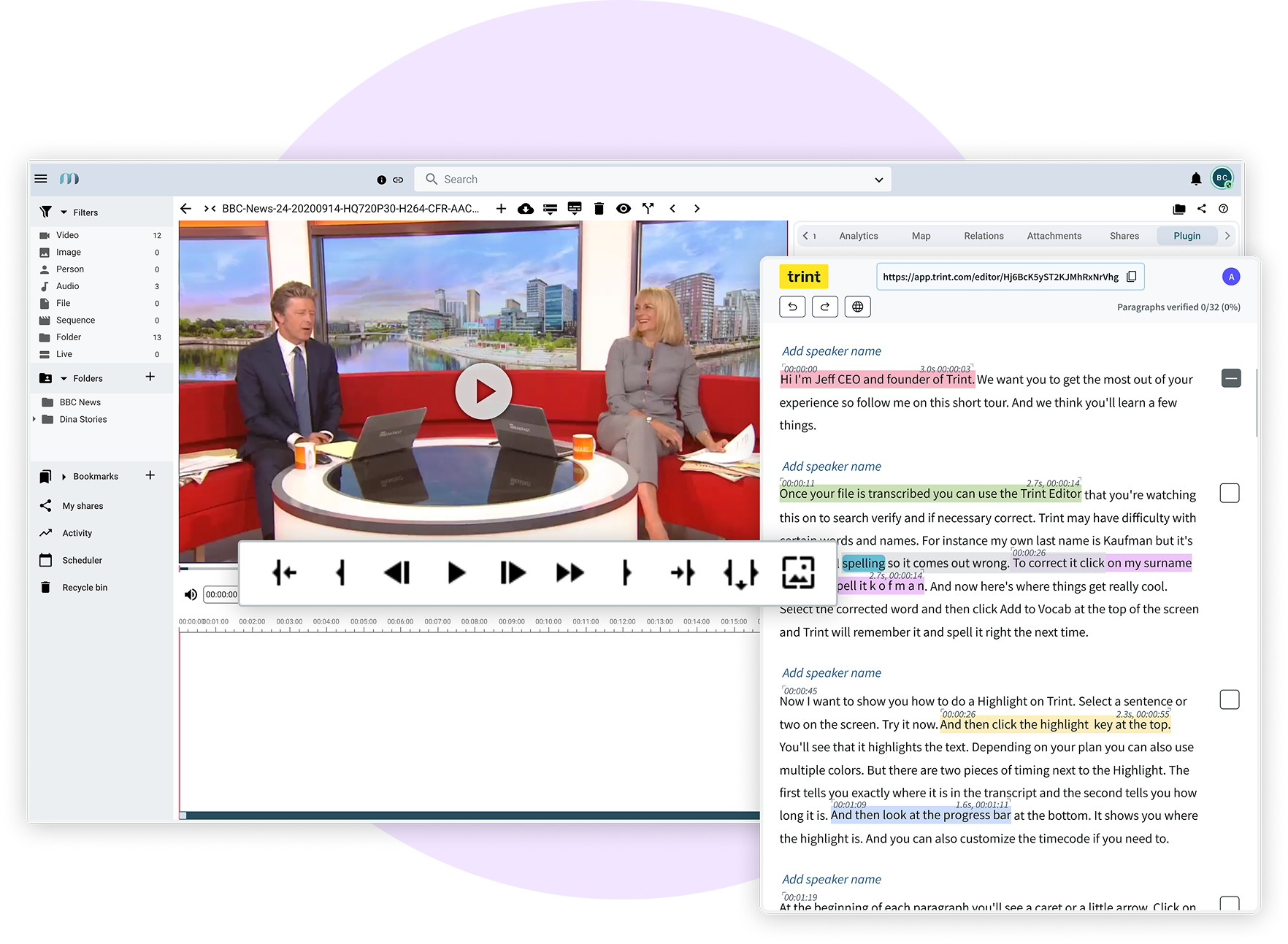
Context
Trint is used by enterprise broadcasters to transcribe and edit video and audio content before it moves into internal publishing systems for clipping, organising, and distribution.
However, these systems (such as Mimir and Octopus) sit outside of Trint, forcing journalists to move between tools to complete their work.
In live newsroom environments, this created duplicated effort, slowed down time-to-publish, and introduced friction across teams operating under significant time pressure.

Understanding the problem in existing workflow
To understand why Trint was not fully embedded in newsroom workflows, we conducted workflow interviews with teams at The New York Times and Associated Press working across both Trint and their publishing systems (Mimir).
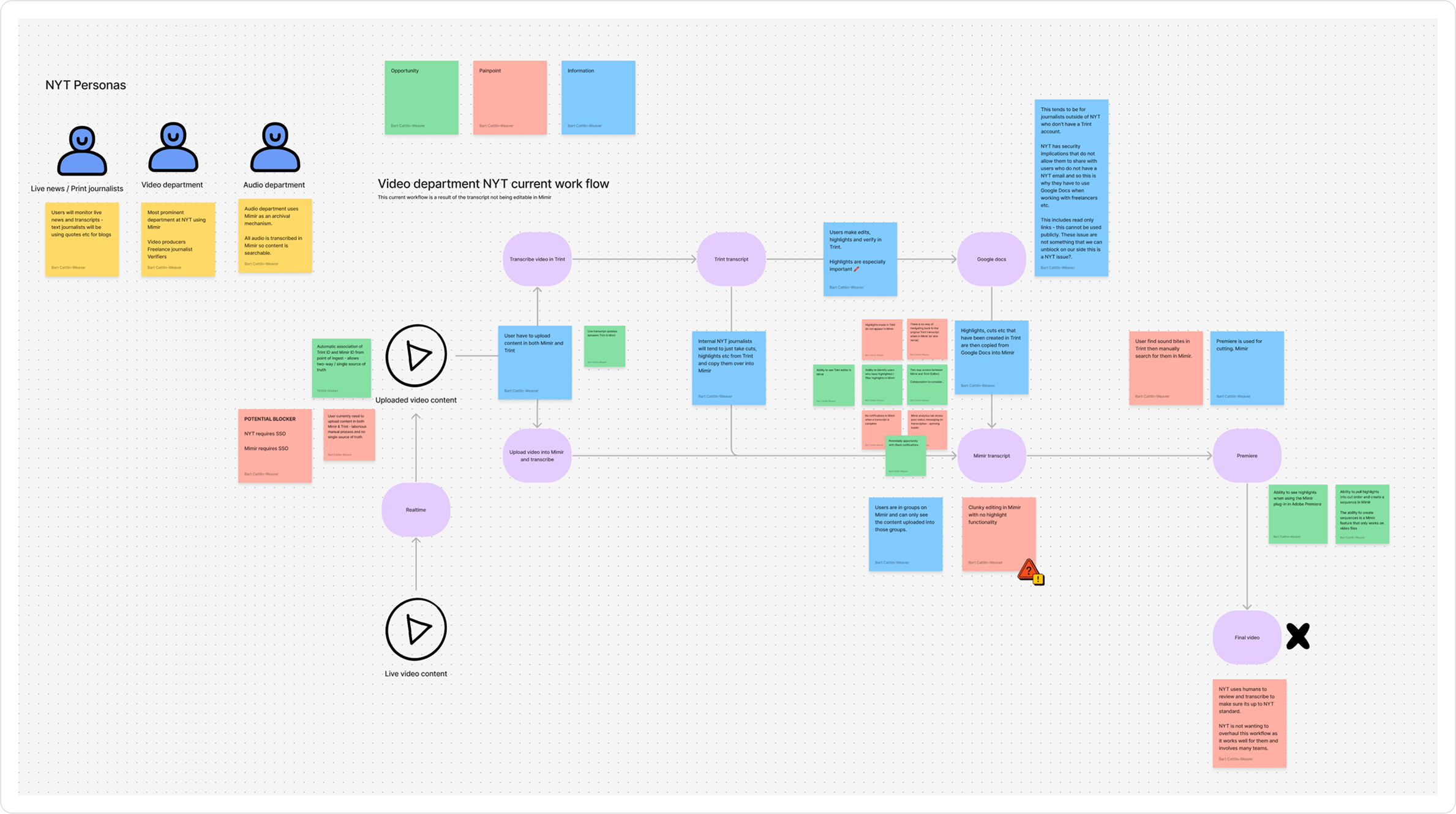
We found that workflows were fragmented across tools and teams, with responsibility split between transcription, editing, and publishing.
This resulted in significant duplication of effort. Journalists would correct transcripts and highlight key quotes in Trint, then export notes into shared documents, which were passed to another team member to recreate edits and clips in the MAM.
Media also had to be uploaded into both systems, and once inside the MAM, teams lost key functionality they relied on in Trint, particularly highlighting, which was critical for identifying moments for publication.
Key insight
The workflow lacked a single source of truth, forcing journalists to duplicate work across systems. This meant that as work moved between tools, Trint’s value broke down and had to be manually recreated.
The problem
There was no shared source of truth across newsroom systems, forcing journalists to duplicate work across platforms, slowing production and limiting Trint’s role in enterprise workflows.

Shaping the approach
The goal was to integrate Trint into the publishing system in a way that meant work done in Trint didn’t need to be recreated.
This meant making sure corrections and highlights made in Trint were still available and usable in the publishing system.
Rather than trying to replicate everything, we prioritised the parts of the workflow that directly supported clip creation, and left out anything that wasn’t needed in that context.
Redesigning how Trint supported the workflow
The MAM was central to newsroom production and couldn’t be replaced, so the solution needed to fit within its existing structure.
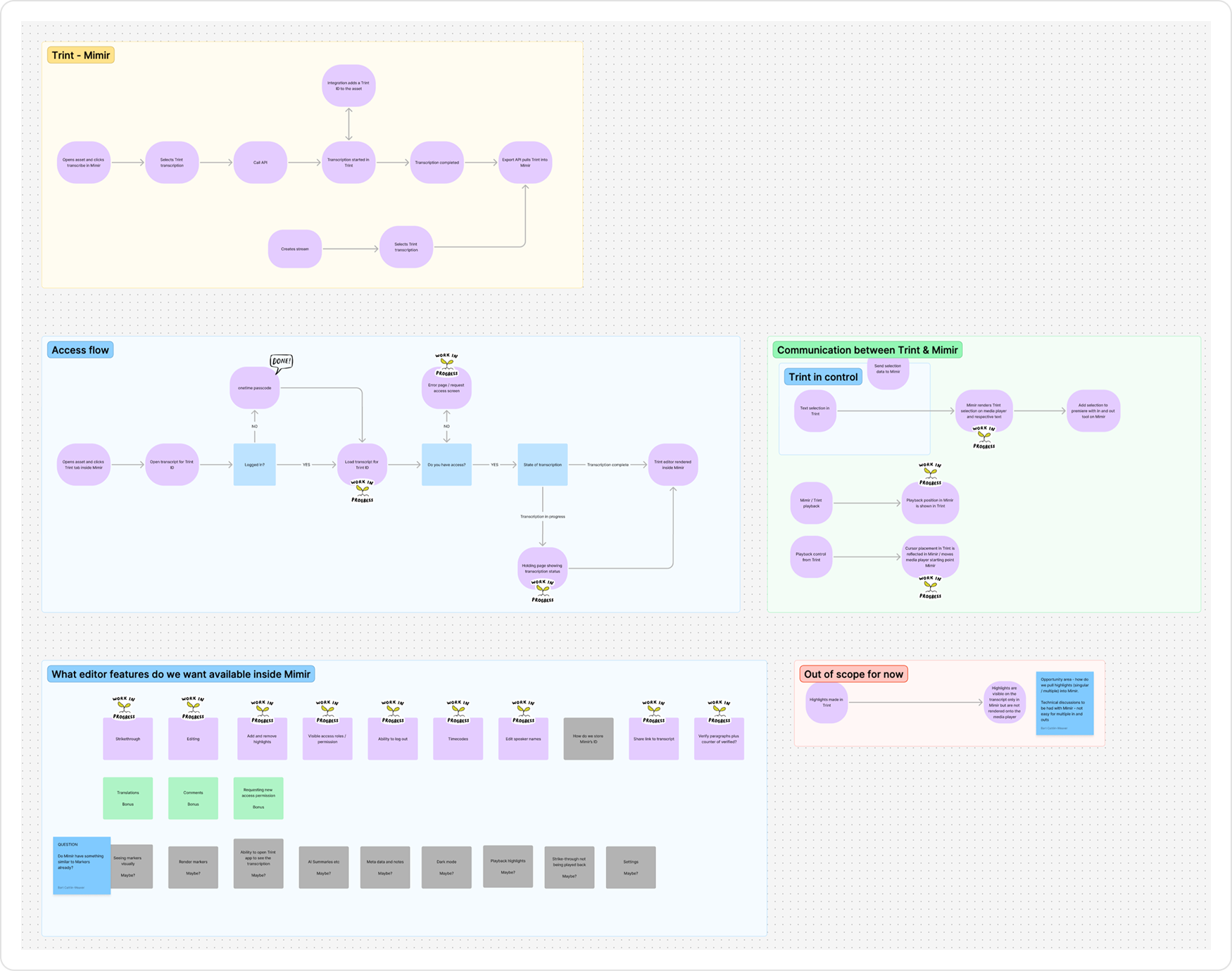
I worked with the team to map how transcript data would move between systems, focusing on how work done in Trint could be used in the publishing system without being recreated.
A key part of this was defining which parts of the Trint editor were needed in this context. Rather than replicating the full product, I prioritised the features that directly supported clip creation, particularly transcript corrections and highlighting.
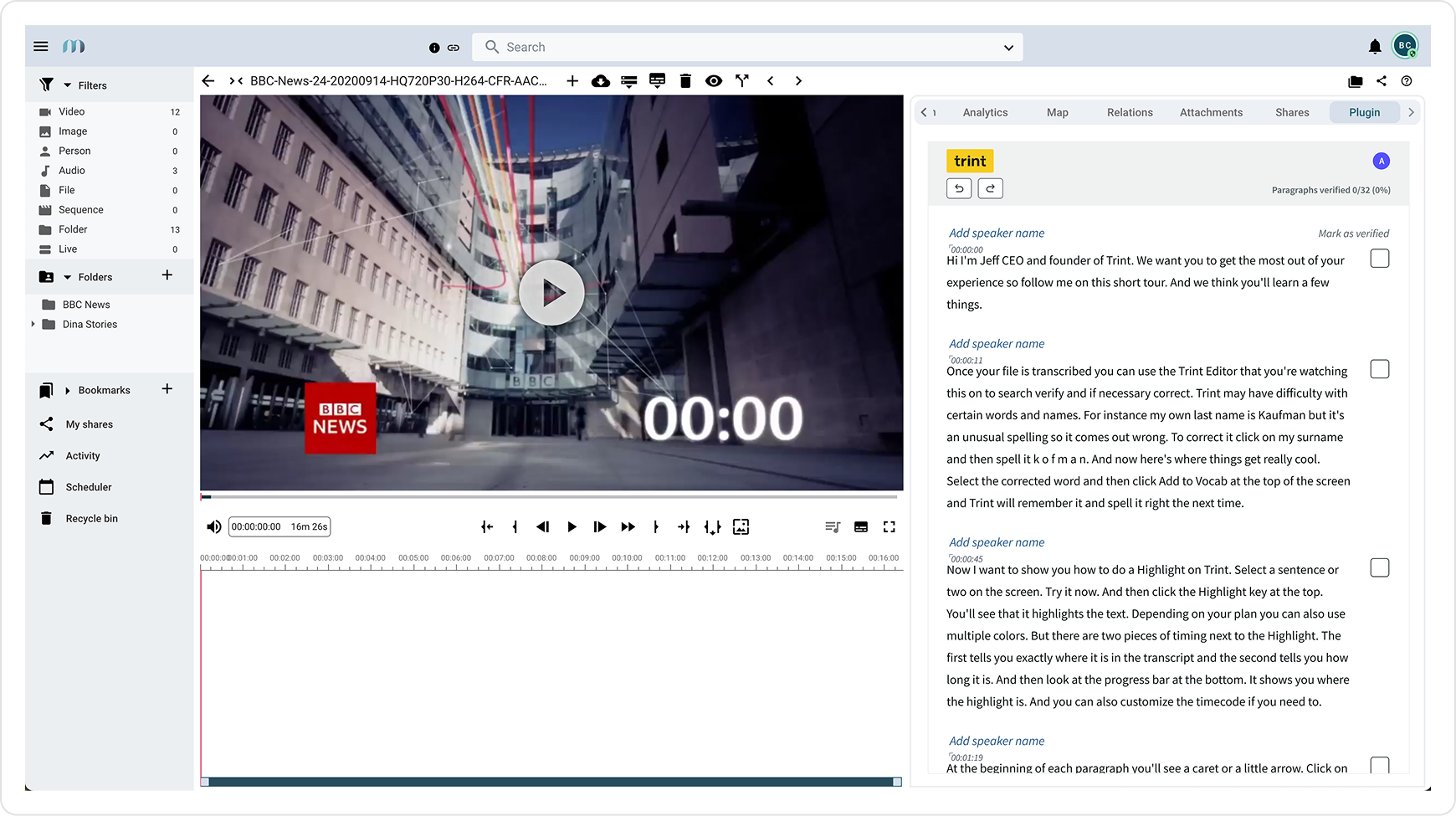
Based on this, I designed a simplified version of the editor that could be used within the MAM, allowing teams to access and use transcript work without leaving their existing workflow.
Iterating with newsroom teams
We developed an initial version of the integration and tested it with The New York Times newsroom team. Observing how journalists worked within the publishing environment surfaced additional requirements that weren’t obvious at the outset.
🚪 Transcript access & deep linking
Journalists needed to quickly move between the embedded transcript and the full Trint platform when deeper editing or collaboration was required. This led to the introduction of clear entry points that allowed users to open or share the transcript directly in Trint without breaking their workflow.
🔎 Search behaviour
When observing journalists use Mimir, many relied on browser-level search (Control + F) to find specific words. However, this surfaced results across the entire interface rather than within the transcript itself.
In response, we introduced transcript-specific search functionality within the integration, allowing journalists to quickly locate keywords without disrupting their editing flow.
🌍 Translation capability
During testing, journalists highlighted the value of being able to translate transcripts directly within the publishing workflow, particularly for international teams.
We included Trint’s translation capability within the integration, adding functionality the publishing system did not natively provide and allowing journalists to work across languages without leaving their environment.
🛟 Onboarding
To support adoption, we introduced a lightweight onboarding screen within the integration tab that clearly articulated the value of the integration and how it supported newsroom workflows.
Final designs
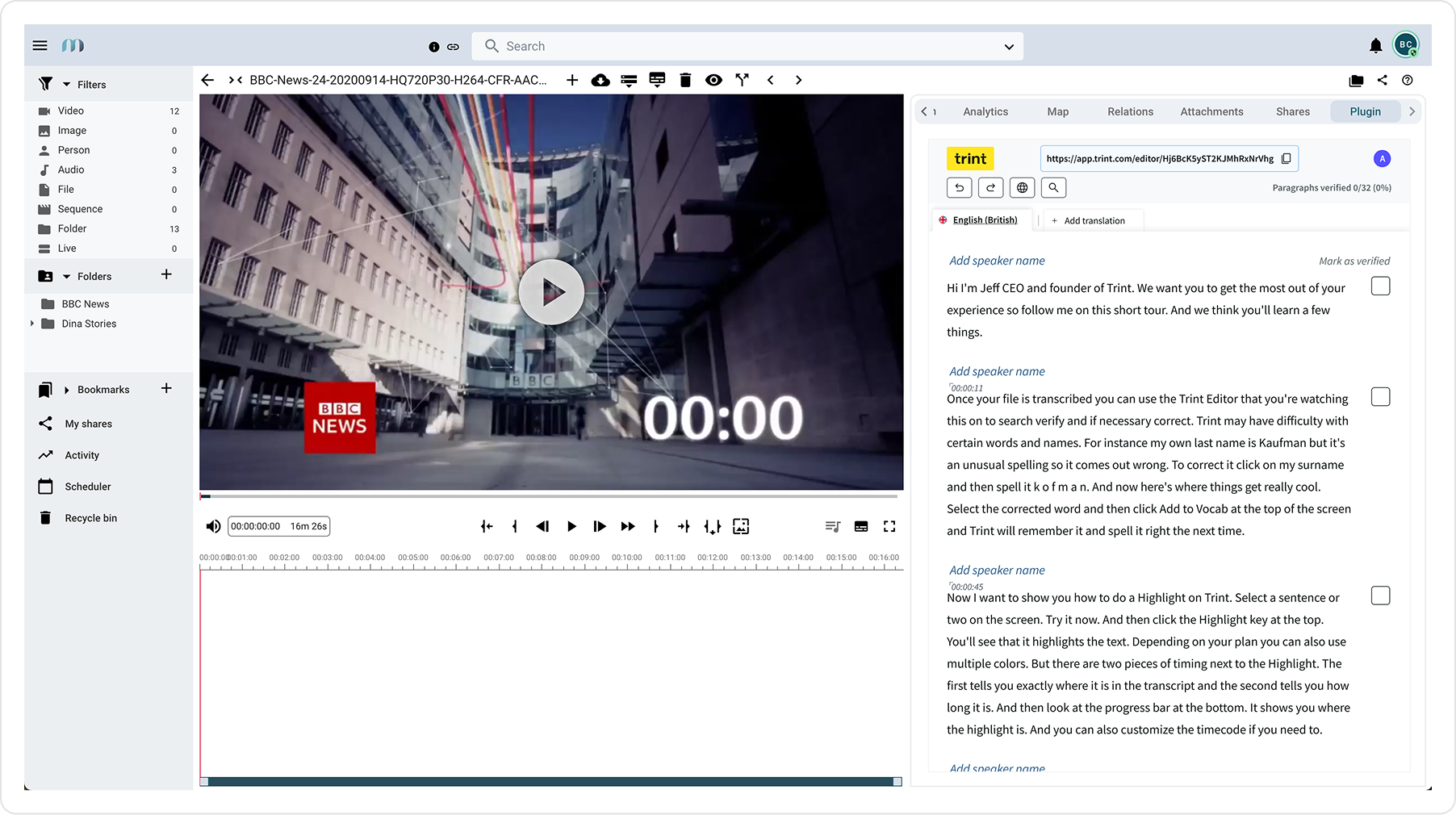
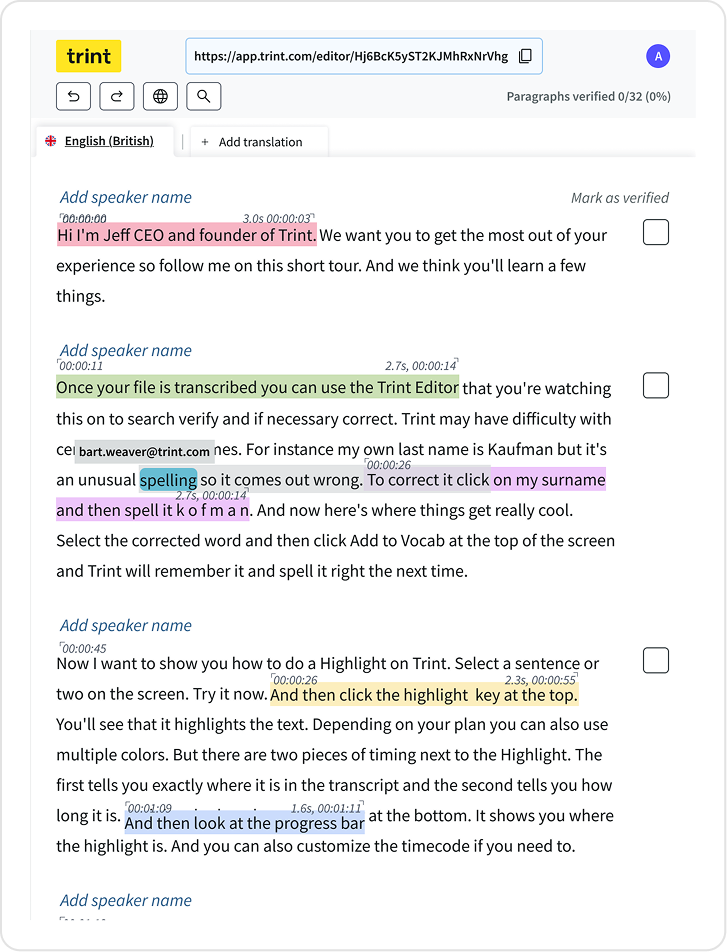
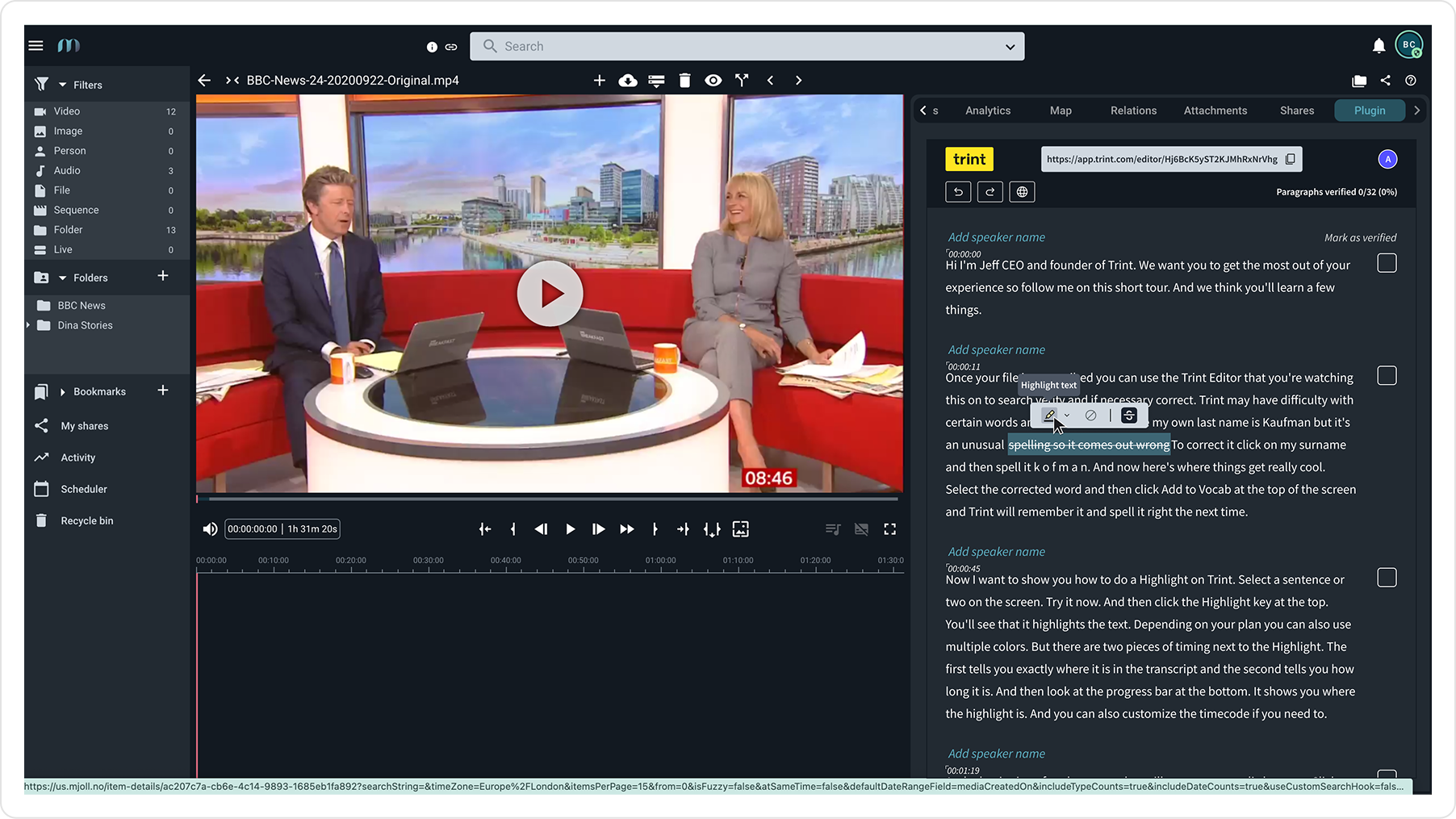

Business outcome
What began as a workflow improvement evolved into a significant commercial driver. The integration was showcased at major industry events including NAB and IBC, generating substantial enterprise pipeline, and expanded from its initial launch with Mimir to additional publishing platforms including Octopus.
Enterprise wins
The integration work I led directly contributed to securing new enterprise customers including Sinclair Group, Axel Springer (BILD) and VRT.
$750k+ pipeline generated
Enterprise opportunities created in 2025 as a direct result of the integration, becoming the fastest-growing commercial channel for the business.
$100k+ expansion revenue
Additional revenue generated from existing customers including Reuters, AP and CBS.